• Skip to main content
  • Skip to footer

Rowan Mangan

Writer. Mom. Wild Inventurer.

  • Contact me
  • Wild Inventures Blog

Toads with Teeth: on talking to our fears

July 5, 2022

Dear ones,

I’ve been thinking about change these past few days. Specifically, I’ve been thinking about its big white scary teeth.

Last week, my toddler made a very amazing discovery: a toad. (Bear with me.) It was on our back patio, where we gather in the late afternoon to commune and watch the forest. Lila responded to the little guy very much as she does to all new things she encounters. She pointed and cried out, “Oh wow! Cool!”
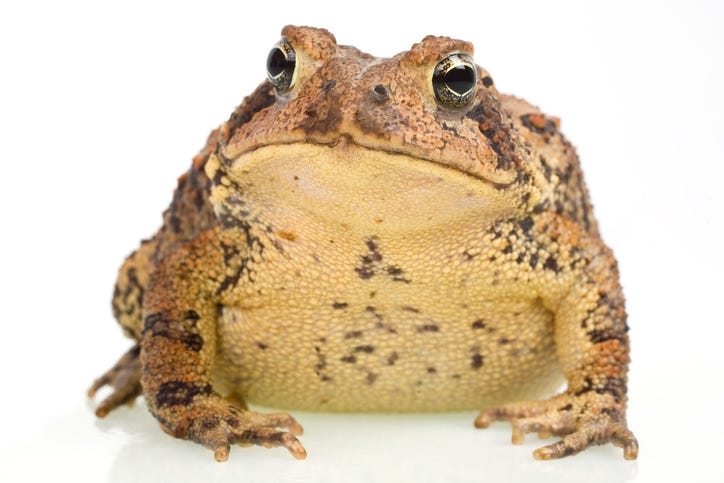
 

“Oh wow! Cool!”

After some pretty funny slapstick attempts to capture our new friend, we got him safely to a spot in the forest where we decided he would be happy.

Lila was completely captivated. She squatted down in front of the toad where he was quietly recovering from his adventure, and proceeded to study him like he contained the mysteries of the universe. From time to time, I heard her exclaiming softly, “Oh wow! Cool!”

I imagined the churning in her little mind.

What does its skin feel like? How does it move? How can I play with it?

Oh wow, Cool!

An Aussie upbringing

I couldn’t help comparing this moment in the lush and benevolent Pennsylvania woods to the times I encountered new creatures in my own childhood back in Australia.

When I was a newborn baby, my father spent a whole afternoon trying to evict a deadly brown snake from our kitchen with a broom. I found my first highly venomous redback spider on our front porch at the age of four. As ten-year-olds, my cousin and I once found an abandoned schoolbag in a park bush and pulled it out to investigate. What we found was a funnelweb spider, which leapt out in full attack stance and proceeded to chase us for six blocks. (I mean, that’s how long we ran before we were sure we’d lost him.)

In Australia, as everyone knows, most wild animals will kill you within a minute of meeting you. If they aren’t physically capable of killing you, they will at the very least wish you ill. And probably glare.

Aussie kids do not exclaim “Oh wow! Cool!” when they see an unfamiliar creature. Our way is more along the lines of, “It has teeth! Run!”

👆This is a little ditty reflecting on the relative dangers of living in Australia and the USA.

Puppies and umbrellas

All baby animals are basically the same thing, right?

When I got my first puppy, I was sharing my house with a single mom who had a 1 year old child.

The two of us would have long conversations about “parenting,” only occasionally stopping to remember that the dog’s language delay wasn’t actually cause for a speech therapist, or that the baby didn’t actually need access to the backyard to use the potty.

What I learned from being a puppy mom is this: If you want your dog not to be neurotic, show her as many different things as possible when she’s really little.

The dog training literature is hilarious. I diligently copied out these endless checklists: puppy has walked between parked cars. Puppy has seen someone with an umbrella. Puppy has enjoyed pina coladas and has been caught in the rain.
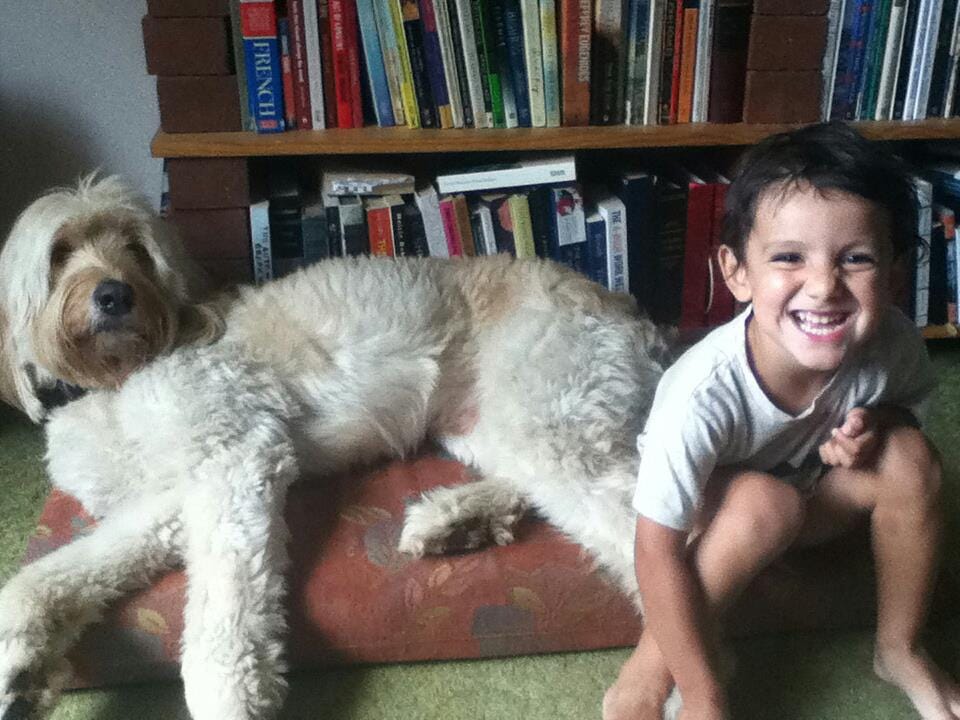
Stepbrothers

Yes, the training was like a wacky scavenger hunt, but the thinking seemed sound. During early life, mammals are usually protected by their parent, or pack, right? This is when they need to inventory their world to discover what’s normal, what’s safe, what can be dismissed without alarm when they see it later?

Because at a certain point, those little creatures will be out on their own and their survival largely depends on treating anything new as potentially life-threatening.

(My current household would be much calmer if, for instance, our dogs had seen a lot of Amazon delivery trucks when they were babies.)

Basically, when they are very small, animals divide the world into two categories: “Oh wow! Cool!” and “It has teeth! Run!”

And so it is—of course—with us. At a certain point in our development, human beings tend to assign what’s familiar as “cool,” and treat anything new as though it may have teeth.

Our Inventure

Outside of the savannah and its ubiquitous toothy predators, of course, we need different behavior. I mean, it probably doesn’t make much sense for me to see a new Instagram update and go sprinting away screaming because I can’t figure out how to post a reel.

But nor am I saying that we should go around assuming that everything’s wonderful. “Oh wow, cool!” is not a viable blanket judgment for the unknown.

Instead, for this week’s Wild Inventure, what if we focus on the questions Lila asked when she focused on her toad friend?

What if we squat down before our scary upcoming social event and ask ourselves: how does it move? How can I move to feel comfortable within it?

What if we peer closely at our creative roadblock and say, what does its skin feel like? What texture will the finished product have, and what small step will make it feel closer?

What if we look our fear right in the eye, and instead of judging it as good or bad, we take the time to say, Hello, little one. What are you and what are you like?

Best of all: How can I play with you?

For me, I’m going to try watching myself insist that my fears have shiny, long, very sharp teeth, and then I’m going to see if that’s actually true.

But I’ll be keeping my running shoes on my feet just in case. I’m an Aussie, after all.

Love, Ro

This article originally appeared on Rowan’s Wild Inventures substack newsletter. To subscribe and get all Rowan’s posts in your inbox, head over to Wild Inventures on substack now. 
you may also like...

  • Parenting inventures
  • Inventures in Seeing
  • What are Wild Inventures?

Filed Under: Parenting inventures

Previous Post: « A Radical Heart
Next Post: The Joy of Getting to Zero »

Footer

find me on instagram!

“Why are you doing this? Why are you wasting time “Why are you doing this? Why are you wasting time on this? What’s it for?”

That’s the “culture worm” talking... 🐛

Culture says everything we do has to be for something: for prestige, power, wealth, and status. Even practicing an instrument becomes preparation for a moment that has to exist.

On this episode of Bewildered, we’re asking: What if that moment doesn’t have to exist?

What if you can just keep getting better and better, not for anyone or anything, just for the moment and the sound of the notes?

Tune in for the full conversation to hear about cultivating the play vibe, living in the present moment, and breaking free from culture worms to pursue what you love.

You can listen to Bewildered episode 133: Playing Without Performing, access the show notes, and find links to resources on our website at the link in our bio—or on your favorite podcasting app. 🎧
Big day at Coven Farms… #backyardchickens #freeran Big day at Coven Farms… #backyardchickens #freerangechickens
Ah, Saturday Ah, Saturday
We were talking to Ro’s father about songwriting a We were talking to Ro’s father about songwriting and the process of writing songs and playing music, and he said, “Just don’t forget that it’s called playing the guitar.” 🎸
Emphasis on playing.

Somewhere along the way, the “culture worm” gets in there and stops us from doing things for their own sake. We stop playing and start performing, even when there’s no one watching.

On this episode of Bewildered, we’re dissecting what it means to reclaim the play in whatever you do. Come play with us! ✨

You can listen to Bewildered episode 133: Playing Without Performing, access the show notes, and find links to resources on our website at the link in our bio—or on your favorite podcasting app. 🎧
Just a rooster, standing in front of a lesbian, as Just a rooster, standing in front of a lesbian, asking her to ignore gender stereotypes
Did you know that you don’t have to do everything Did you know that you don’t have to do everything by yourself?

For example, you can be the one who makes the thing, and someone in your community who enjoys photographing the thing can do that part. 📸

No matter how introverted we are, we just keep landing back in community because it’s never supposed to be self-sufficiency. It’s always supposed to be interdependence.

You can have a part yourself that makes the art, and you can have other parts that do other stuff, but you can also externalize those things to actual other people.

We can help each other. What a concept. 🤯

The culture’s monetization of everything often makes us forget that it doesn’t always have to be a transaction. It can just be a favor.

We saw this happen at our Pure.Wild.Self retreat in Costa Rica. There were twenty-five people there, and Liz Gilbert stopped by one day, and the whole thing turned into people rejoicing in each other’s genius.

Person after person connecting with someone whose joy would help them make their joy into something sustaining. They were trading passions, trading specialties. It was a little village of 25 people, just bursting with interdependence.

That’s what we’re talking about on this episode of Bewildered. Join us!

You can listen to Bewildered episode 132: Enriching Your Enclosure, access the show notes, and find links to resources on our website at the link in our bio—or on your favorite podcasting app. 🎧
We’re always trying to hack our own psyches, right We’re always trying to hack our own psyches, right?

We’re looking for ways to game the system…to reframe things from Sunday-scaries mode into exciting mode.

One hack we keep coming back to is: Money equals points. If you can get the little Pac-Man part of you engaged in money (nit-nit-nit-nit), suddenly you’re moving.

A friend of ours said it best. When Ro asked her what was pushing her to her desk every day to finish her book, she looked up and said: “Well, I’m really looking forward to getting paid.”

It was such a great cut-the-bullshit, cut-all-the-highfalutin-stuff moment.

One way of tricking yourself so that you can move toward the money thing and not get stopped by the switch into “I have to do a job now!” panic, is this: Just make something. Anything.🧶

To hear more about the hacks, tricks, and reframes for getting more of what you love into your life, join us for the full conversation!

You can listen to Bewildered episode 132: Enriching Your Enclosure, access the show notes, and find links to resources on our website at the link in our bio—or on your favorite podcasting app. 🎧
Happy Lughnasadh, festival of first harvest! It’s Happy Lughnasadh, festival of first harvest! It’s lovely to meet some of the potatoes and onions I’ve been talking to these past few months. I just love these midsummer vibes ☀️
We will not be taking questions at this time. #chi We will not be taking questions at this time. #chickens #chickenswholunch #chickensbigdayattheraces
Some recent summer moments 🥰 Some recent summer moments 🥰
When opportunity arises, the culture tells us to m When opportunity arises, the culture tells us to make a pros and cons list. Count up the columns and follow whichever one has more items. It’s all about return on investment: minimize the effort, maximize the reward.

That’s the rational way of navigating, right?

But here’s the thing: You can’t actually know your return on investment ahead of time. It’s always only a projected ROI. And we are not living life in an environment where that’s easy to project, whether we’re talking financially, emotionally, or experientially.

How the f*ck are we supposed to know how to do any of that? 😅

We don’t think a pros and cons list is the answer. On this episode of Bewildered, we talk about what we think works better, and why it might feel a bit counterintuitive at first. Join us!

You can listen to Bewildered episode 130: Following Your Inner Pull, access the show notes, and find links to resources on our website at the link in our bio—or on your favorite podcasting app. 🎧
Nothing like hanging out with my favorite people i Nothing like hanging out with my favorite people in #WilderCommunity with Bilbo Baggins’s chin on my leg. Is this what absolute contentment feels like? 🐾 🌀
These so so precious summer days These so so precious summer days
A summer adventure with my girl A summer adventure with my girl
Do you want to be right, or do you want to make th Do you want to be right, or do you want to make things better?

That’s the question we keep coming back to in this week’s episode of Bewildered.

We’re going with making things better, even knowing we’ll mess it up repeatedly…in the middle of the night in our pajamas and overcoats. (Listen to the episode. You’ll understand.)

What we’ve learned from our friends in Africa is that the word for what we’re all trying to do isn’t conservation. It’s restoration.

And that starts from the inside out, seeking first the conservation of your own joy, and letting that energy be the thing you bring to a world that so desperately needs it. ❤️‍🩹🌍

You can listen to Bewildered episode 128: The Good Faith Footprint, access the show notes, and find links to resources on our website at the link in our bio—or on your favorite podcasting app. 🎧
Notes from an island Notes from an island

follow me on twitter!

Tweets by rowanmangan

Copyright © 2020 Rowan Mangan · Site by Lilt Creative